It's Not Just Picking Paint Colors
That's the first thing most new clients say when they realize what working with an interior designer in Scottsdale actually involves. They come in expecting someone who will hand them a fan deck and point at swatches. What they get instead is a project manager, a space planner, a sourcing specialist, a contractor liaison, a budget strategist, and — if you hire the right person — someone who can read exactly what you want even when you can't quite articulate it yourself.
After 25 years at Park Avenue Design, I've heard every variation of "I didn't know you did that." So let me break it down — clearly, honestly, with no industry jargon — so you know exactly what to expect when you bring an interior designer onto a project.
Phase 1: Discovery and Programming
Every project starts with listening. Before we touch a single material or sketch a single floor plan, we need to understand how you actually live. Not how you think you live. How you actually live.
Do you have dogs that jump on everything? A teenager who commandeers the living room? A partner who works from home and needs acoustic privacy? Do you entertain twelve people at Thanksgiving or two people on a Tuesday? All of that matters — probably more than your color preferences.
This phase is called programming in designer-speak. We're gathering requirements: how many people use the space, what activities happen there, what storage is needed, what lighting conditions exist throughout the day, and what the space needs to do functionally before we start talking about what it should look like.
We also discuss your aesthetic direction — but we go deeper than "modern" or "traditional." We ask about textures you're drawn to, materials that feel wrong to you, whether you want a space that feels expansive or intimate, and how much visual complexity you're comfortable with. The goal is for a finished room to feel unmistakably like you — not like a showroom, and not like a Pinterest board someone else assembled.
Phase 2: Space Planning and Concept Development
Space planning is where interior design separates itself from interior decorating most clearly. A designer with technical training can look at a room and see not just what's there, but what's possible. That awkward living room that's never worked? There's usually a reason — furniture scaled wrong, traffic flow fighting the architecture, or a focal point that's competing with itself.
We measure everything. We document architectural details. We note where the light comes from at 7 a.m. and where it lands at 4 p.m. In Arizona, managing western exposure and the quality of late-afternoon desert sun is a real consideration in how we place furniture and choose materials.
From there we develop a concept — a visual and material direction that serves as the design's backbone. This might include:
- Floor plan sketches and furniture layouts to scale
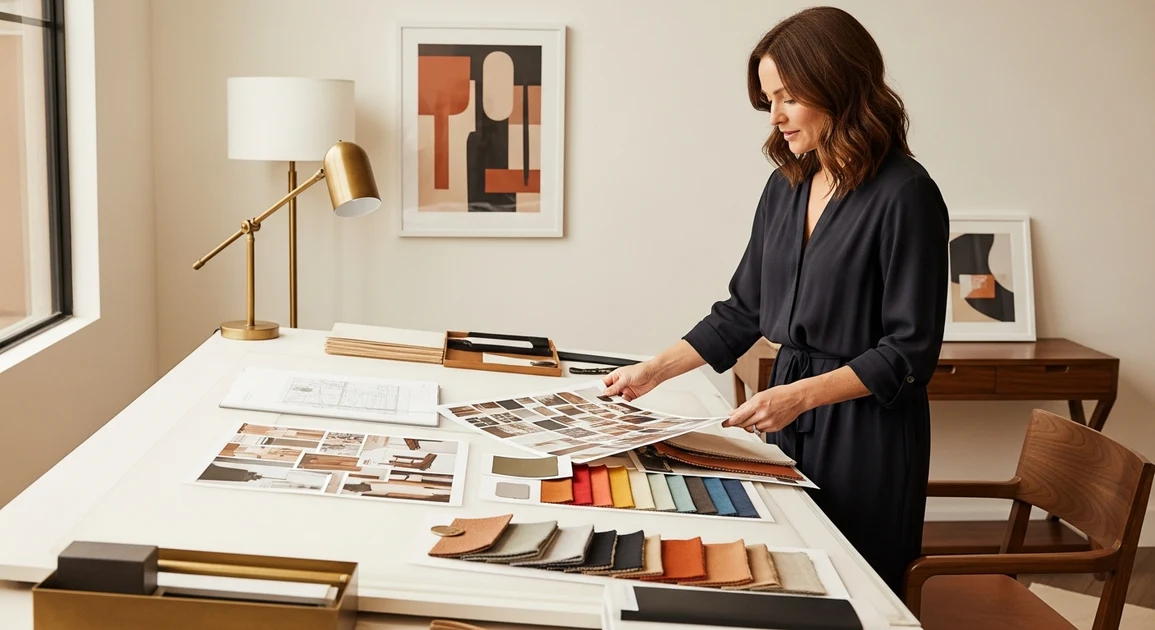
- Mood boards establishing color, texture, material, and overall feeling
- Elevation drawings showing walls with built-ins, cabinetry, or architectural details
- Preliminary material palettes — stone, tile, wood species, fabric families
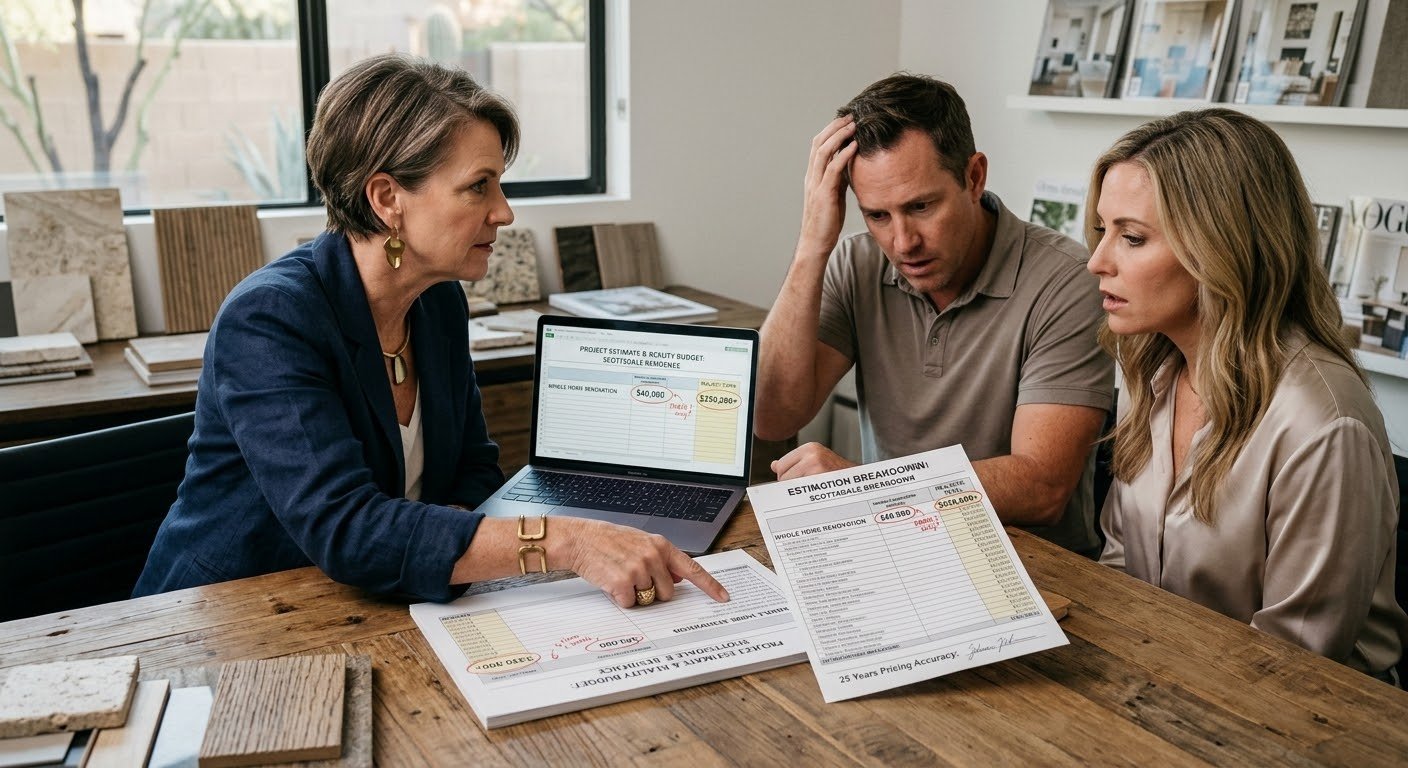
This is also when we have frank conversations about budget. I've built a reputation in Scottsdale and Paradise Valley for what I call radical budget honesty. If a client's wishlist doesn't match their budget, I say so — directly, and with a path forward. I'd rather have that conversation in week two than deliver a beautiful concept that we can't actually build.
Phase 3: Design Development and Specification
Once the concept is approved, the real work of selection begins. This is far more technical than it looks from the outside.
Specifying materials means understanding how they'll perform in your specific environment — not just how they photograph. Arizona homes face conditions most material manufacturers don't design for: extreme UV exposure, dramatic temperature swings between indoor air conditioning and outdoor heat, and in some desert communities, unusually low humidity in winter that affects wood, leather, and certain textiles.
We specify:
- Flooring — species, finish, orientation, transition details
- Stone and tile — slab selection (in person, not off a sample), grout joint size, edge profiles, installation patterns
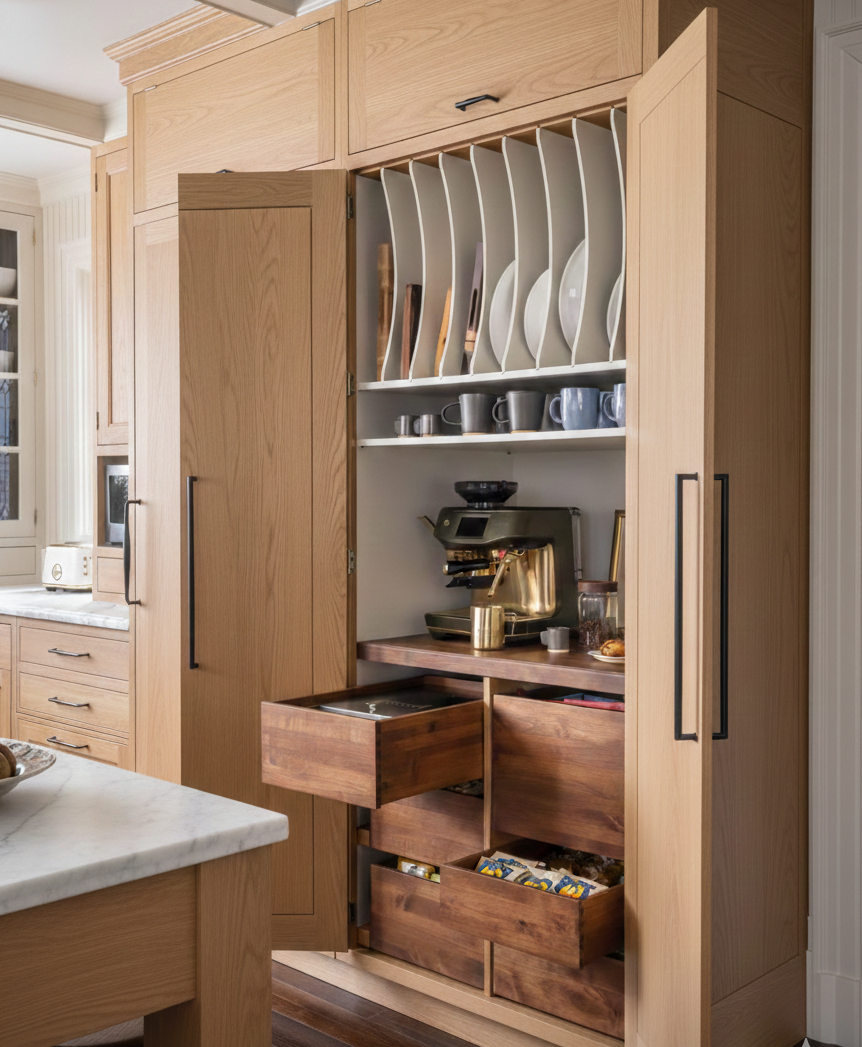
- Cabinetry — box construction, door style, hardware, interior fittings
- Plumbing and lighting fixtures — with actual rough-in dimensions for contractors
- Window treatments — fabric, opacity, operating mechanism, mounting height
- Furniture — custom and trade pieces, with precise dimensions, COM (customer's own material) specifications for upholstery, and lead times
- Art and accessories — sourced to complete the space, not fill it
I travel internationally every year to source directly from artisan workshops — glass artists in Murano and Burano, craftspeople in Marrakesh, textile sources across Europe and North Africa. These aren't trade show finds. I walk into the workshops. I know the people who make the pieces. That access shows up in your home in ways that matter.
I also maintain deep relationships with American manufacturers — tile, cabinetry, bathroom fixtures, furnishings. In 2026, with tariff pressures affecting imported goods, that domestic sourcing network matters more than it did even two years ago. We can pivot without compromising on quality.
Phase 4: Procurement and Project Management
Selecting items is one thing. Getting them to your home correctly is another. Interior designers manage a supply chain that most homeowners have no idea exists.
We place orders with trade vendors — companies that don't sell directly to the public — and we track them through production, shipping, and delivery. We follow up on lead times, flag delays before they cascade into larger scheduling problems, and coordinate deliveries to arrive in the right sequence. (You don't install light fixtures before the electrician rough-ins. You don't deliver upholstered furniture before painting is complete.)
Procurement also involves:
- Receiving and inspecting items at our receiving warehouse before delivery to your home
- Identifying damage in transit and managing claims with vendors
- Coordinating with general contractors, subcontractors, and tradespeople
- Reviewing contractor submittals and shop drawings to catch errors before installation
- Making field decisions when conditions on-site don't match what the drawings anticipated
This phase can last anywhere from a few weeks for a single-room refresh to 18 months for a full custom home. The timeline varies dramatically based on project scope, contractor schedules, and the lead times of the items specified.
Phase 5: Installation and Styling
The day the furniture goes in is always a revelation — for clients and for us. A room that's been a construction site for months becomes a home in the span of a few hours. But installation day is only possible because of all the specification and procurement work that came before.
After furniture and fixtures are in place, we do a final styling pass — placing accessories, art, books, plants, and objects in a way that gives the room life without looking "decorated." There's a difference between a room that looks like it was styled and a room that looks like someone genuinely lives there beautifully. We're always after the latter.
What an Interior Designer Doesn't Do
It's worth being clear about scope, because it varies by project and by designer.
We don't typically do structural engineering, permit drawings (unless we have specific architectural drafting support on staff), or general contracting. What we do is work alongside those professionals — reviewing their work, catching conflicts, and making sure the design intent is actually executed in the field.
We also don't function as decorators who drop off throw pillows and call it done. If that's what you need, a talented decorator or a great retail store may serve you better. If you need the whole process — from square footage to final styling — that's what a licensed, credentialed interior designer provides.
The Thing Clients Value Most
If I'm honest, the thing clients consistently say they valued most isn't any one phase of the work. It's the feeling at the end that the space reflects them — not a trend, not a style we imposed, not a showroom version of luxury. Something that feels personal, livable, and right.
That outcome doesn't happen by accident. It happens because of what we do in phase one: listening carefully, asking the right questions, and building a design foundation on what you actually need rather than what looks good on a mood board.
When a client walks into a finished room and says, "It feels like me" — that's the job. Everything else is the process of getting there.
If you'd like to understand more about how the hiring process works, read What to Expect During Your First Interior Design Consultation or Interior Designer vs. Interior Decorator: What's the Difference.
Ready to Talk About Your Project?
Park Avenue Design offers a complimentary initial consultation to explore whether we're the right fit for your home or commercial project. Gabrielle Roeckelein, ASID, NCIDQ brings 25 years of residential and commercial interior design experience to every client relationship — and genuine honesty about what your project will take to do right. Reach us at (480) 961-7779 or visit parkavenuedesign.com/contact-us to get started.
Gabrielle Roeckelein, ASID, NCIDQ — Park Avenue Design, Inc. | Scottsdale, Arizona